Advanced synthesis, Catalytic systems and new catalyst designing
Advanced Synthesis & Catalysis emphasizes on research & the use of efficient synthetic techniques and strategies in organic, bioorganic, pharmaceutical, natural product, macromolecular, and materials chemistry to stimulate and accelerate that process.
The art of selecting the proper active material to create the desired reaction is known as catalyst design. Catalyst design is the rational application of available data to the selection of a catalyst for a specific reaction. Many of the procedures that have been devised arbitrarily are now undergoing significant effort to provide a reasonable scientific basis. At the reactor level, catalyst design is recognized as an element of the integral reactor design.
- New strategies and aspects in catalyst design and selection
- Designing of nanostructured porous solids
- High-performance catalysts
Committee Members
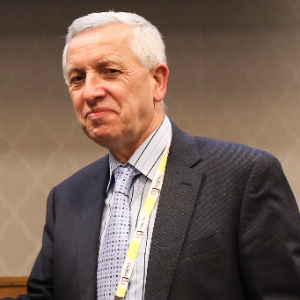
Stanislaw Dzwigaj
Sorbonne University, France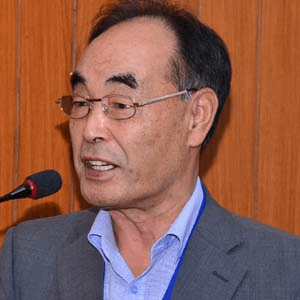
Dai Yeun Jeong
Asia Climate Change Education Center, Korea, Republic of
Samy Ponnusamy
MilliporeSigma, United States
Gustaaf Schoukens
Ghent University, Belgium CCT 2027 Speakers

Oluwaseun Akinrinde
University of South Florida, United States
Maria Parfenova
Institute of Physical Materials Science, Russian Federation
Alexander Valyaev
Nuclear Safety Institute of the Russian Academy of Sciences, Russian Federation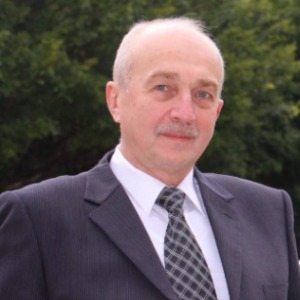


Title : Application of vanadium and tantalum single-site zeolite catalysts in heterogeneous catalysis
Stanislaw Dzwigaj, Sorbonne University, France
Title : Indicators for evaluating green management practice of enterprises
Dai Yeun Jeong, Asia Climate Change Education Center, Korea, Republic of
Title : DOZN™3.0 - A quantitative green chemistry evaluator for a sustainable future
Samy Ponnusamy, MilliporeSigma, United States
Title : Towards integrated biodesign-inspired translational platforms to co-develop innovative biotechnologies, biomanufacturing and biomarketing to revolutionize the future of personalized and precision healthcare and life science bioindustry
Sergey Suchkov, N.D. Zelinskii Institute for Organic Chemistry of the Russian Academy of Sciences, Russian Federation
Title : Nanocomposite materials for structured catalysts of fuels reforming, catalytic layers in membrane reactors for oxygen and hydrogen separation and fuel cell anodes operating in the internal reforming mode
Vladislav Sadykov, Boreskov Institute of Catalysis, Russian Federation
Title : Green nanobiocatalysts for sustainable ester production: Advancing lipase immobilization and process optimization
Praveen Dahiya, Amity University Uttar Pradesh, India